
A containerized, field-validated system that turns produced water and flare gas into high-purity hydrogen — engineered for the realities of a remote upstream site, not a laboratory.
The HydroThermIA platform sits at the point where a site's water disposal line, flare stack, and diesel manifold all converge. Produced water and flare gas or thermal exhaust enter as inputs; the HydroThermIA Electrolysis Unit (HydroAEM) treats the water to electrolysis grade and captures the gas as energy input.
The result is a single piece of field equipment that delivers up to 98% H₂ purity with zero drilling interruption — hydrogen for diesel blending, oxygen as an industrial-grade by-product, and a documented basis for carbon credit generation, all validated on producing industrial sites, not in a pilot facility.
Africa's industrial sector faces a compound energy crisis. The centralized grid cannot keep pace with demand, high-temperature industrial processes cannot electrify economically, and over 40 billion cubic metres of gas are flared across the continent every year.
For Nigeria's upstream oil and gas operators specifically, three recurring liabilities compound into a continuous drain on operating budgets at every remote site:
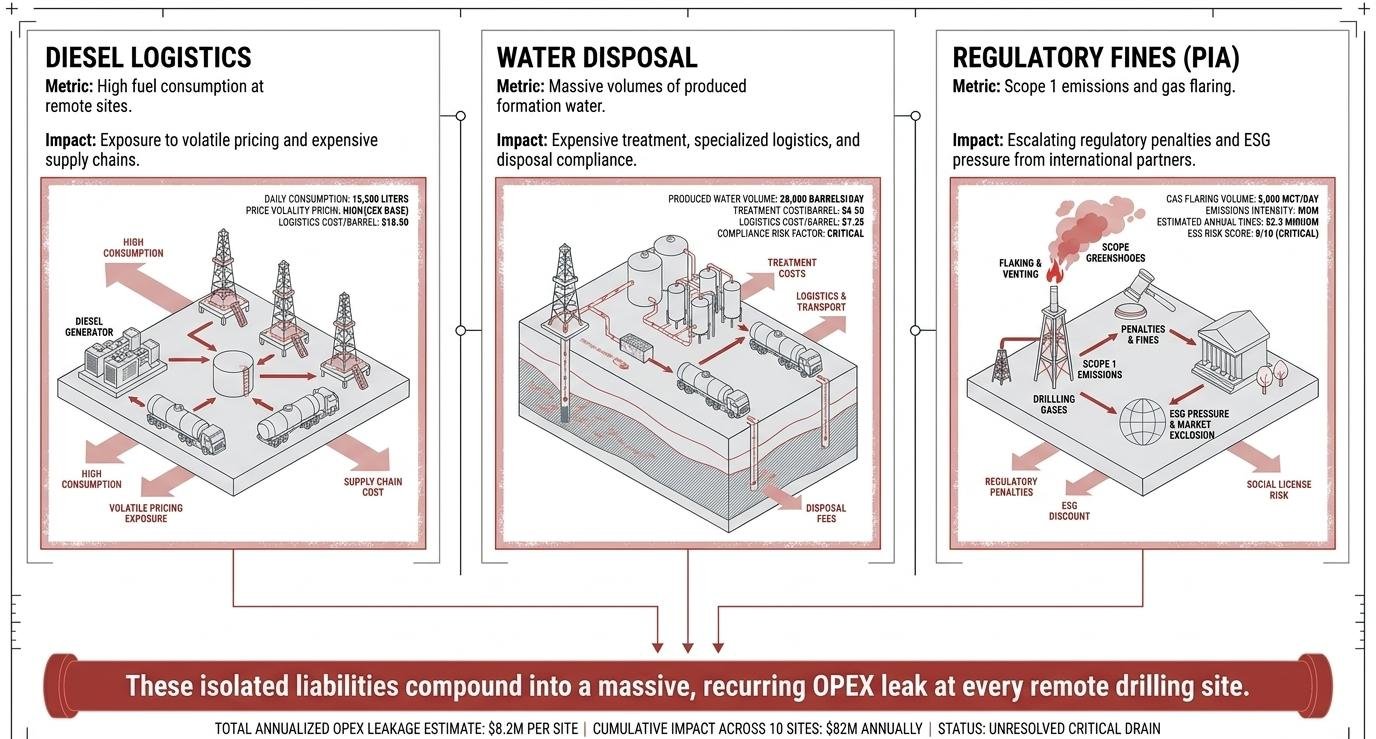
Remote rigs run on diesel generators with average daily consumption of approximately 15,500 litres. Exposure to volatile, CIF-benchmarked pricing and expensive supply-chain logistics drives logistics costs of roughly $18.50 per barrel-equivalent.
A typical site produces approximately 28,000 barrels per day of formation water. Treatment costs run near $4.50 per barrel and logistics/transport approximately $7.25 per barrel — with compliance risk rated critical given disposal regulations.
Gas flaring volumes around 5,000 thousand cubic metres per day, combined with rising Scope 1 emissions intensity, expose operators to escalating penalties and ESG pressure. Estimated annual fines reach approximately $2.3 million per site, with an ESG risk score rated 9 out of 10 (critical).
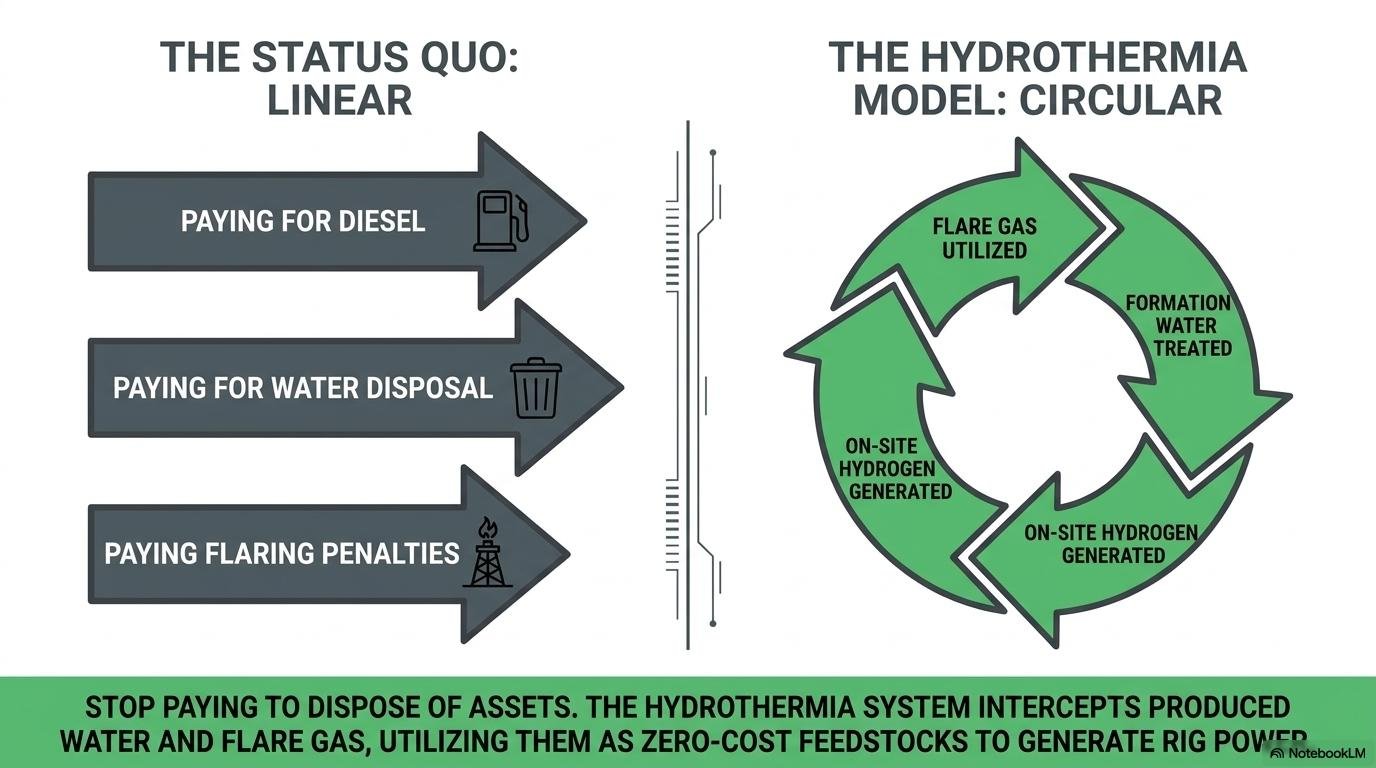
The status quo is linear: operators pay for diesel, pay for water disposal, and pay flaring penalties — three separate, recurring cash outflows tied to assets that are otherwise treated as waste.
The HydroThermIA model is circular: produced formation water is treated, flare gas is captured and utilized, and the system generates onsite hydrogen continuously — intercepting the same streams that previously cost money and converting them into zero-cost feedstock for rig power.
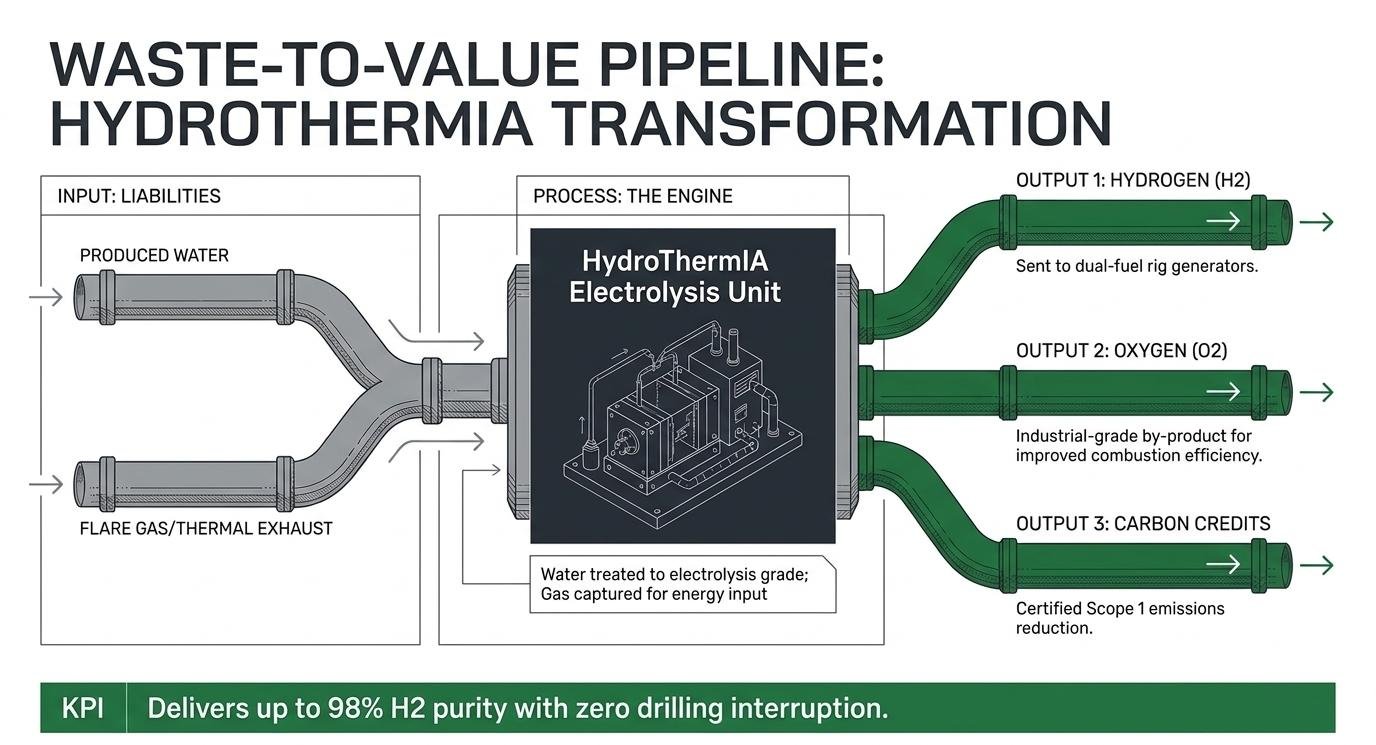
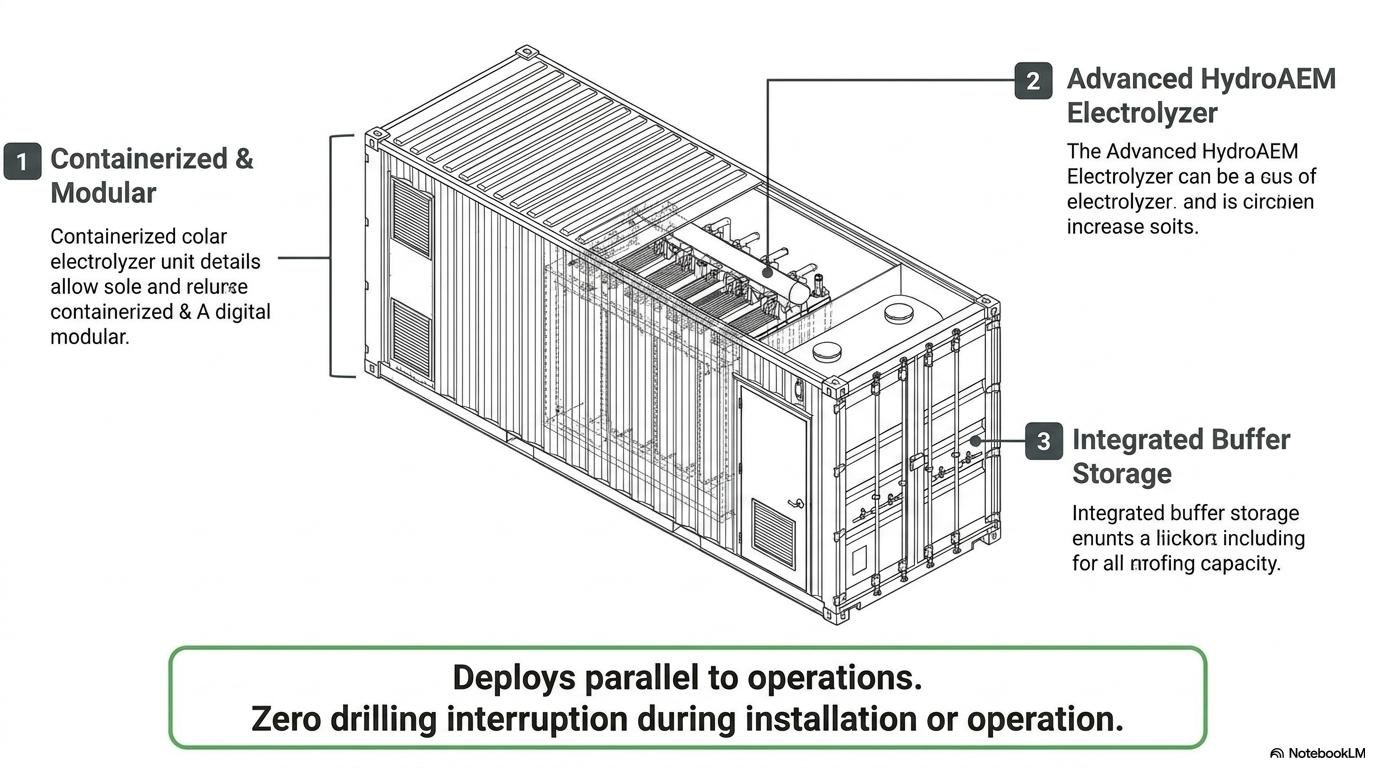
The HydroThermIA unit is purpose-built for deployment at active, remote drilling sites without disrupting ongoing production:
Deploys parallel to operations. Zero drilling interruption during installation or operation.
Uses feedstock the site already produces — no new water or gas sourcing required.
Surpassed 5,000 continuous operational hours without unplanned shutdown at its first commercial site.
Transportable and installable using the same equipment logistics operators already run.
Capacity grows with the site by adding modules, not by re-engineering the installation.
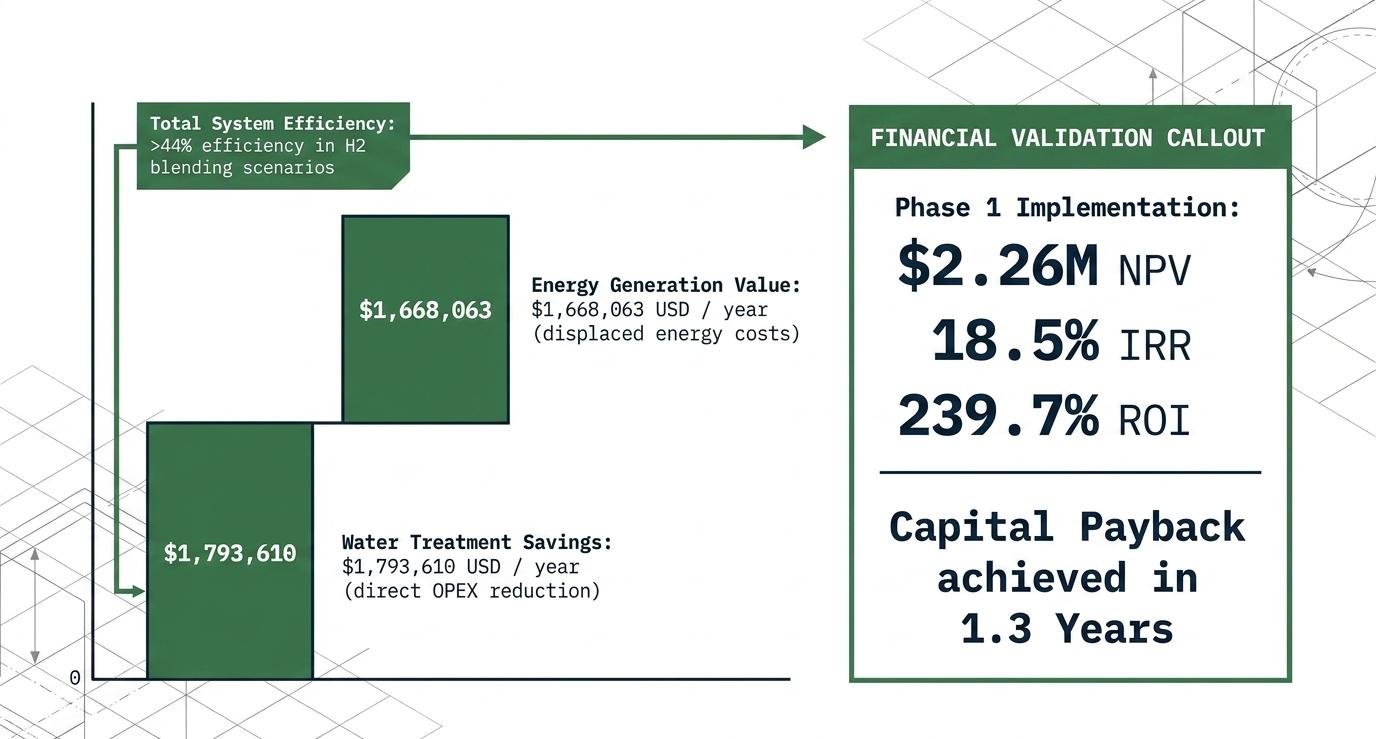
Beyond technical validation, HydroThermIA's Phase 1 implementation model has been financially modeled and stress-tested against real operating data from the deployments above. The combined value of reduced water OPEX, displaced diesel OPEX, and total system efficiency (greater than 44% in H₂ blending scenarios) produces the following Phase 1 financial profile:
Total Economic Value, in other words, is not diesel savings alone — it is the sum of reduced water OPEX, displaced diesel OPEX, eliminated flaring fines, and carbon credit monetization, compounding across the lifetime of each deployment.
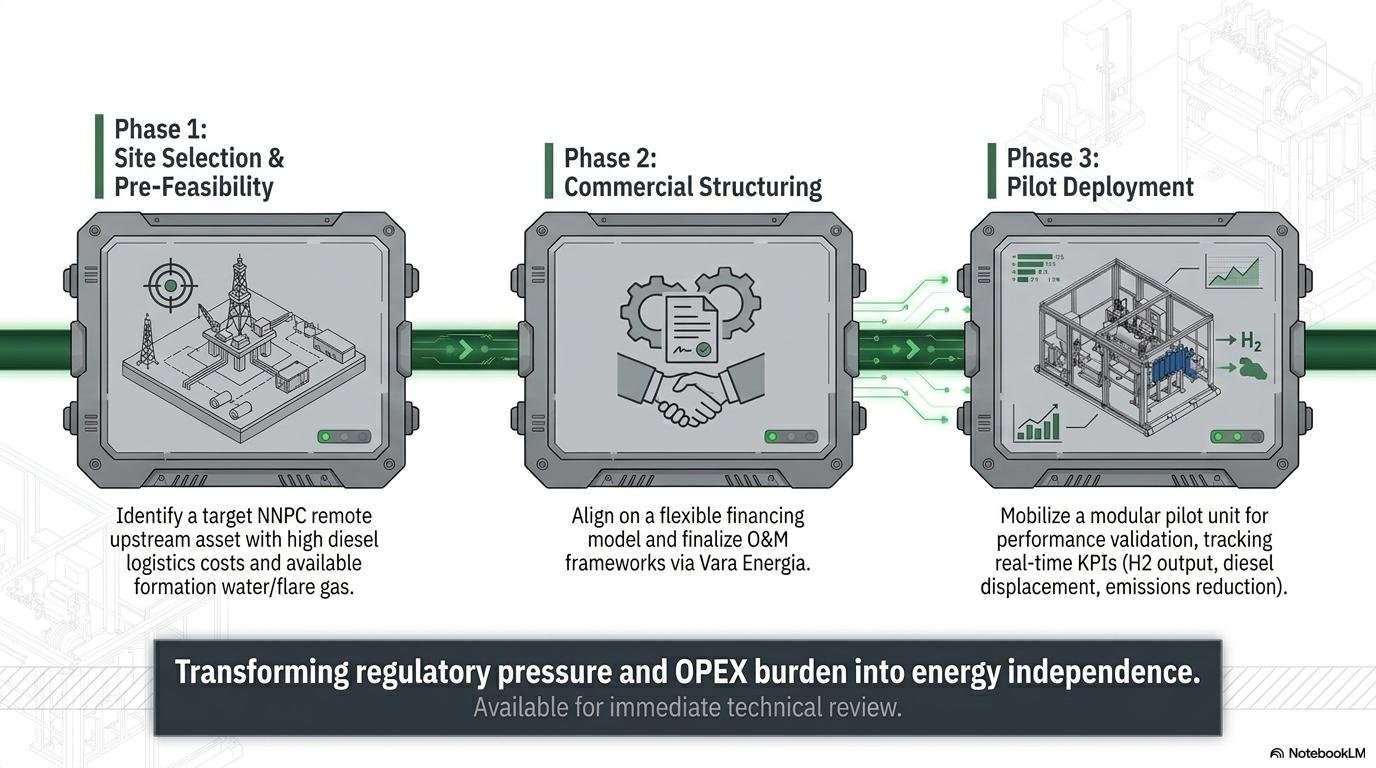
Transforming regulatory pressure and OPEX burden into energy independence — available for immediate technical review.
Identify a target upstream asset — for Nigeria, this includes NNPC joint venture and marginal field sites — with high diesel logistics costs and available formation water or flare gas feedstock.
Align on a flexible financing model and finalize operations and maintenance frameworks via Vara Energia, structured to minimize the operator's upfront capital exposure.
Mobilize a modular pilot unit for performance validation, tracking real-time KPIs including hydrogen output, diesel displacement, and emissions reduction.